Friday, February 25, 2022

Robert Johnson


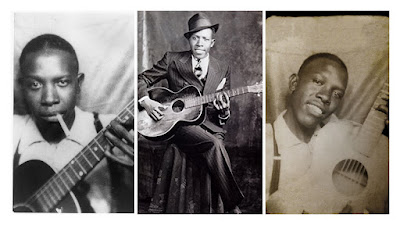
I'm a late arrival to the whole podcast thing, only really paying attention over the past year and a half.  I have searched for a few good podcasts about the blues and recently stumbled onto one that any fan of the blues would probably enjoy, Last Fair Deal:  The Robert Johnson Podcast.  It's hosted by Preston Lauterbach and Elijah Wald.  Both have written extensively about the blues and especially about Robert Johnson.  Lauterbach collaborated with Johnson's half-sister, Annye E. Anderson, on her book Brother Robert - Growing Up With Robert Johnson, and Wald wrote Escaping The Delta:  Robert Johnson and the Invention of the Blues, so one could say that they were pretty familiar with the subject of this podcast.

There have only been four or five episodes so far (it began airing in August of 2021), but all of them have been excellent.  Ms. Anderson was interviewed in the initial episode and she provided some good information about Johnson that only a family member could relate (and also promised a future book with even more information in the near future).  Others highlighted so far have been Larry Cohn, the producer of the Robert Johnson box set from the early 90's, as well as other excellent historical reissues, Living Blues founder Jim O'Neal, who shared a couple of interviews with musicians who knew Johnson, including a most interesting take on what really killed Johnson, and musician Jerron "Blind Boy" Paxson.  All of the episodes so far have been very informative and enlightening.

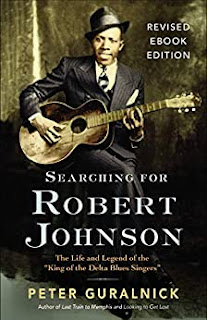
The first episode that I heard was an interview with my favorite music author, Peter Guralnick, who wrote the essay Searching For Robert Johnson in the early/mid 80's, publishing it in book form in the late 80's.  Guralnick, Lauterbach, and Wald talked for about 45 minutes about Johnson's history, the additional information that has come to light since Guralnick published his essay, and Guralnick's relationship with Mack McCormick, one of two researchers (the other was Steve LaVere) who collected, and jealously guarded, much of Johnson's known history.  Both men have died and much of their research remains under wraps.

During the discussion, Guralnick mentioned that he had updated and re-published Searching For Robert Johnson, adding relevant information recently revealed as well as some other information, including a superb discography and bibliography to help fans dig deeper into Johnson and his influences.  The new edition of the book is available in digital form only right now and can be found at Amazon.  I picked it up before Christmas and read it in one sitting.  It's been a while since I read the original and Guralnick fills in a few blanks here and there, but the original essay is well worth reading if you've never read it.

Since I started listening to Last Fair Deal, I've managed to fill in a few gaps in my Robert Johnson listening, both of him and some of his influences.  I thought I'd list a few in case anyone out there might be interested in hearing more.  Johnson basically took from those musicians he enjoyed and added his own brand of blues to the mix, not unlike future music pioneers of other genres like Elvis Presley or Miles Davis or Jimi Hendrix, who combined other styles and genres into their music.  What made him stand out among blues artists, then and now, was his unique guitar playing and his vocals, which, with their vulnerable, almost haunted quality, were quite different from many of his contemporaries.

Here are some recommended recordings from Johnson and from a few of his influences......

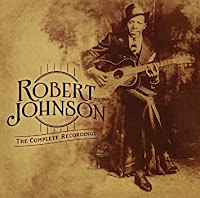
Robert Johnson - The Complete Recordings:  The Centennial Collection (Sony Music Entertainment):  Like most blues fans, I had the Johnson box set when it was released in 1990.  I also had the separate King of the Delta Blues Singers albums released in the 60's that I bought while I was in college back in the 80's.  The sound on The Complete Recordings (released in 2011) is superior to the other sets and the playing order is improved over the box set, which listed alternate tracks immediately following the released version, which tends to get monotonous for the regular listeners.  It's really splitting hairs as far as the sound goes, so either collection deserves a spot on blues fans' shelf.


Influences

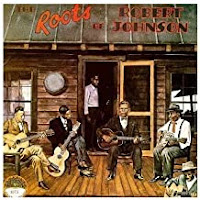
The Roots of Robert Johnson
(Yazoo Records):  This covers just about every major influence on Johnson's music.....including Skip James, Charley Patton, the Mississippi Sheiks, Son House, Kokomo Arnold, Lonnie Johnson, Leroy Carr, and Scrapper Blackwell.  As you listen to a lot of these songs, you will figure out where some of the later blues standards came from, such as Blackwell's "Kokomo Blues" from 1928, the origin of the standard "Sweet Home Chicago."  There are actually two versions of this album on Yazoo, one has 14 songs and the later version has 23 (with 11 from the first edition).


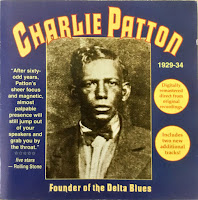
Charley Patton - Founder of the Delta Blues and King of the Delta Blues (both Yazoo Records):  Now Patton and Johnson don't really sound that much alike.....Patton was a rougher, coarser, rawer listen than Johnson was......in fact, you definitely hear more of a Patton influence in Howlin' Wolf's music, but Patton influenced just about every Delta blues artist during his career with either his vocals, his percussive guitar playing, or his showmanship.  Granted, it's a bit harder to listen to Patton's music because it is rougher (the poor sound quality of his surviving recordings doesn't help either.....Patton recorded for Paramount, whose production methods and materials were of less-than-stellar quality), but listener's patience will be rewarded with some great music.  I don't really have a preference as to which set is best.....both have lots of good music.  


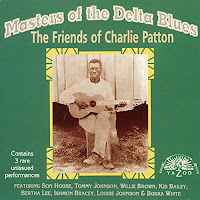
Masters of the Delta Blues
(Yazoo Records):  Subtitled The Friends of Charlie Patton, this is a historic set that includes tracks recorded at an awesome 1931 recording session that included recordings from Patton, Son House (some of his best work), and the seldom-recorded, but highly influential Willie Brown.  There are also sides from Tommy Johnson and Bukka White included.  These will give you a good idea of the music that surrounded and influenced Johnson as he traveled the Mississippi Delta.  Yazoo has several excellent Mississippi blues collections with similar music from different artists, but this is a great place to start listening and actually may be all you need.......the Son House tracks are just phenomenal in their drive and intensity.


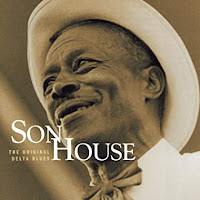
Son House - Delta Blues:  The Library of Congress Sessions, 1941-1942 (Biograph Records) and The Original Delta Blues (Sony Music Entertainment):  House was probably the most direct Delta influence on Johnson, so Alan Lomax made these early 40's recordings of House while researching Johnson's music.  These recordings capture House's intensity as well as those 1931 recordings.  House was also a huge influence on Muddy Waters' music.  The Original Delta Blues are recordings from the 1960's, after House's "rediscovery."  House had to basically be retaught how to play his music (by Canned Heat's Alan Wilson, who guests on a couple of the tracks), but he was a quick study and the only reason these tracks aren't more revered is because the earlier recordings are hard to top. 


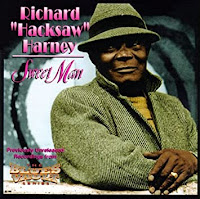
Richard "Hacksaw" Harney - Sweet Man (Adelphi Records):  Harney was a later influence on Johnson, apparently.  I plan to write more about him in a separate post, but Harney was considered by many to be the gold standard on guitar playing back in Johnson's time.  His style was quite different from the traditional Delta blues sound, but according to Robert Lockwood, Jr., Johnson traveled with Harney and played with him in the latter couple of years of his life.  His playing is actually closer to Mississippi John Hurt's, and goes more in a Piedmont direction, to be honest.  Who knows......had Johnson lived, he might have incorporated some of Harney's sound into his own playing.  Harney's career in music was short-lived for a number of reasons and, hopefully, I will be able to elaborate more in the near future about him.


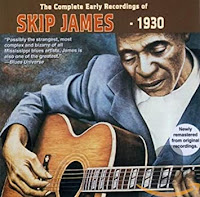
Skip James - The Complete Early Recordings (Yazoo Records):  I wrote about James many years ago on this blog.  The first time I ever heard him just blew me away.....I feel like Johnson was influenced by his high-pitched haunting vocals more than anything, although James' "Devil Got My Woman" might have influenced some of Johnson's own work, plus Johnson did adopt James' "22-20 Blues" as "32-20 Blues."  James' music can be an acquired taste as well, especially these earlier recordings (which were done in 1931, not 1930 as indicated on the album cover), also from Paramount.  Check out his Vanguard recordings of the 60's and then revisit these if you want. Skip James wasn't in a class by himself as far as Delta bluesmen went, but it sure didn't take long to call roll.


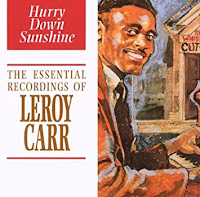
Leroy Carr - Hurry Down Sunshine:  The Essential Recordings of Leroy Carr (Indigo Records):  Carr, with guitarist Scrapper Blackwell, was one of the most popular blues artists of his time and his sound (with Blackwell's guitar) really influenced Johnson and countless other rural blues musicians with his warm, mannered vocal delivery and his musical arrangements, the predecessor to what is now called "urban" blues.  Many of his songs are considered standards today.  Other more "urban" blues artists, like Lonnie Johnson and Big Bill Broonzy influenced Johnson's playing, but Carr and Blackwell were probably the most influential.  As mentioned above, Blackwell recorded "Kokomo Blues" in 1928, which was transformed into "Old Kokomo Blues" by Kokomo Arnold in 1934, and transformed by Johnson into "Sweet Home Chicago" a few years later.  


In a future post, we'll look at some of Johnson's contemporaries and followers, so please stay tuned.


Friday, December 31, 2021

FBF's Top 20 for 2021

You may have noticed a lack of activity on the blog over the past few months.......if you've stopped by to visit, that is (if you have, much appreciated).  I apologize, but things have been hectic around the old homestead, really over the past couple of years, but more so since August.  I would think about writing something up at the beginning of the week, then it would never occur to me again until it was too late to post on Friday ('cause Friday Blues Fix, you know).  Fortunately, the household seems to be on the way to recovery and things seem to be settling down at work, too.  I want to keep the blog going as long as I can, but things happen.  I do appreciate everyone who stops by and reads the old posts.

I haven't exactly been idle as far as the blues goes.  I'm still cranking out reviews of new (and a few old) albums at Blues Bytes each month, but I have a huge stack that I'm working through....I've had some for over a year.  I used to average about 15-18 reviews a month, but now I'm only able to do about 10-12.  I also have a blog post that I've been working on for a couple of months, off and on, about a legendary bluesman from years ago.  I'm hoping that will spring a few sequel posts along the same line.  In addition, I am working on a guest post for another blog......I'll tell you more about it when (if) it goes live.

I also plan to track down a few Mississippi blues man headstones in the coming months.  I've got several that are close by that I didn't even realize were near, so more about those later, too.  I'm also going to start looking at some of Mississippi's pre-war blues figures, which was inspired by some of these recent excursions to gravesites and the used record store, so be patient. 

Meanwhile, here's my Top 20 for 2021, in no particular order.  Again, I have a stack to listen to and I try to at least listen to most of the new CDs I get in the mail, but it may be a while before I actually write them up for Blues Bytes, but my Top 10 of these 20 will be published there sometime in January.

Rodd Bland and the Memphis Only Band - Live on Beale Street:  A Tribute to Bobby "Blue" Bland (Nola Blue Records):  A loving tribute to father from son that any fan of the father needs to hear.

Robben Ford - Pure (Ear Music):  Ford's first instrumental album in nearly 25 years is a near-perfect combination of his blues and jazz sensibilities, leaning toward the blues.  A stellar effort.

Stevie J Blues - Quarantined (PKMG):  A strong set of contemporary blues and soul-blues that embraces old school, while being thoroughly modern at the same time.

Brad Vickers and his Vestapolitans - The Music Gets Us Thru (ManHatTone Records):  Vickers and band always just miss my Top 20 with their always interesting releases.....modern tunes with a nod to the earliest blues stars (particularly Tampa Red). This is their best release to date.

Wee Willie Walker and the Anthony Paule Soul Orchestra - Not In My Lifetime (Blue Dot Records):  Walker's final recordings, completed just a few days before his death, are superb. 

Ben Levin - Still Here (VizzTone):  Piano blues are making a strong comeback thanks to some fantastic young talent.  Levin has put out two masterful releases for VizzTone in the last couple of years and he's barely in his twenties.

Dexter Allen - Keep Moving On (Endless Blues Records):  This is a great set of contemporary blues and soul from a Mississippi blues man who deserves to be better known.  

Eddie Turner -   Change In Me (7-14 Records):  It's been a long time since I've heard Turner's powerful brand of blues and this one didn't disappoint.  

Chris Gill - Between Midnight and Louise (Endless Blues Records):  Gill turns in one of the best solo acoustic recordings that I've heard in a long time.  If you like acoustic blues, you need this in your collection. 

Clarence Spady - Surrender (Nola Blue Records):  I wish Spady recorded more often.....it's grueling to wait so long between releases, especially when they're this great.

Corey Ledet - Corey Ledet Zydeco (Nouveau Electric Records):  I really started back listening to zydeco this year, both my old collection and several awesome new releases.  Ledet's tribute to his legendary family and the music that influenced him is loaded with life and energy.....both traditional and modern at the same time.

Gerald McClendon - Let's Have A Party! (Delta Roots Records):  If vintage soul, blues, and R&B is your bag, look no further.  

Tedeschi Trucks Band - Layla Revisited (Live at Lockn') (Fantasy Records):  Not many bands would dare to take on the Derek and the Dominos classic, but TTB is more than up to the task (with an assist from Trey Anastasio and Doyle Bramhall II) and while it doesn't make you forget the original, it certainly deserves a place next to it.

Veronica Lewis - You Ain't Unlucky (Blue Heart Records):  Another firebrand piano player, 17 year old Lewis is a force of nature on this wild and varied set of piano-driven blues.

Dwayne Dopsie - Set Me Free (Louisiana Red Hot Records):  This disc reminded me why I started listening to zydeco in the first place.  Dopsie does a wonderful job, mixing in just enough soul and blues while keeping you dancing.

Robbin Kapsalis & Vintage #18 - Soul Shaker (Bird Song Records):  Kapsalis is one of the strongest vocalist currently practicing in the blues and soul genres.  It certainly helps that she's backed by one of the tightest bands currently practicing as well.

Christone "Kingfish" Ingram - 662 (Alligator Records):  Ingram expands on his sound with some excellent songwriting and weaving some soul and R&B into his blues.  Don't sweat it though.....there's still plenty of his powerhouse guitar present.

Guy King - Joy Is Coming (IBF Records):  King's first release since 2016 is an inspired, stunning work that encompasses blues, soul, jazz, and vintage R&B.  Well worth the wait for a soul-satisfying experience.

Sean Chambers - That's What I'm Talkin' About:  A Tribute to Hubert Sumlin (Quarto Valley Records):  Chambers presents a powerhouse blues rock set paying tribute to one of his biggest influences and, as a bonus, Sumlin's chief employer as well.

New Moon Jelly Roll Freedom Rockers - Vol. 2 (Stony Plain Records):  The second volume of this super session from 2007 featuring Jim, Luther, and Cody Dickinson, Alvin Youngblood Hart, Jimbo Mathus, and Charlie Musselwhite is as much fun as the first volume.


That's our Top 20 for 2021.  Hopefully, some of those are yours, too.  Thanks for stopping by.  Hope to see you soon.

Friday, August 6, 2021

Summer Listening


It's been a few weeks since we've posted here, but there have been a lot of blues to be seen and heard during that time.  We've been out and about a bit, maintaining a respectable distance as much as possible, but it's been a while since we've been able to travel very much......almost five years for one reason or another, so we've taken a few opportunities to check things out this summer.  

In May, we traveled to Macon, GA.  I'd wanted to go there for years.  The Allman Brothers Band called Macon home for a number of years and the house they lived in during the early 70's, dubbed The Big House, is now a museum with tons of ABB memorabilia.  I became a fan of the band after buying their Dreams box set in the late 80's and really seeing what the band was all about.....how deep their roots dug into the blues, as well as jazz, soul, R&B, and country, eventually forming the foundation for Southern rock.

A pair of Duane Allman's guitars
For a fan of the band, The Big House is a must-see.  It traces the band's history far beyond their time spent in Macon, with lots of clothes, instruments, furniture, and many other items even donated by the band over the years.  It was really cool getting to see the actual guitars used by Duane Allman, Dickey Betts, Warren Haynes, and Derek Trucks, along with one of Gregg Allman's B3's, bass guitars from Berry Oakley, Allen Woody, and Oteil Burbridge, and Butch Trucks and Jaimoe's tools of the trade, too.

The Big House also had a great gift shop, so I picked up a couple of ABB CD's.....a set from the early 70's with the first incarnation of the band and a 2009 set from the 40th Anniversary tour at the Beacon Theatre with Eric Clapton sitting in, along with a DVD from the early 90's band (I later tracked down a couple of other DVDs from the Beacon.....around 2003 and 2009).  The later edition of the band was every bit as formidable as the first edition to these ears.  We also visited Rose Hill, the cemetery where Duane, Gregg, Berry, and Butch are buried, along with the gravesites of Elizabeth Reed and "Little Martha" (the inspiration for a couple of their greatest songs).

Otis Redding statue in Macon, GA
Soul legend Otis Redding also called Macon home, but the Otis Redding Foundation building, which also hosts a museum, from what I'm told, was closed on the weekend and his grave is on private property.  We were also unable to visit the Capricorn Records museum at Mercer University because of time limitations, but we would love to go back soon and catch what we missed.

My birthday is in June, which means Amazon gift cards, which means I picked up lots of great music and reading material.  I grabbed a couple of country blues CDs......Bukka White's phenomenal Vocalion recordings from 1937-1941 (some of the most passionate blues ever put to wax), and an excellent early 60's set from Arhoolie called I Have To Paint My Face, which features tracks from Sam Chatmon, K.C. Douglas, Big Joe Williams, and R.C. Smith, and is definitely worth a listen.  I also found Johnny Shines' Last Night's Dream (with Big Walter Horton, Willie Dixon, Clifton James, and Otis Spann in support) for a nice price and it's definitely a keeper, which should be obvious given the line-up.

I also grabbed King of the Electric Blues, a collection of Muddy Waters' Blue Sky recordings from the late 70's (the old lion still had plenty of fire in his belly), Rough Dried Woman  a collection of Magic Slim's Wolf recordings (because you can't have enough Magic Slim in your collection), and a copy of John Watkins' lone album, Here I Am.  I heard Watkins on the 80's Alligator collection, The New Bluebloods, but never heard anything else.  He released this album in the 80's for a French label, which was difficult to find until Blues Reference reissued it a few years back.  Watkins never released another album due to personal issues and some hard luck, but he is performing again now, so there's always a chance for more.


I also purchased a few more releases from the great Black Top Records....some that I missed during the label's later years.....Roscoe Shelton's Let It Shine, Earl Gaines' Everything's Gonna Be Alright, Tommy Ridgely's Since The Blues Began, and a retrospective of Anson Funderburgh's recordings with the label (Thru the Years).  I was impressed with the quality of the first three recordings...all three singers sounded as good as their earlier recordings, maybe even better.....and I had almost forgotten what a great guitarist Funderburgh was.  He was one of my first blues guitar heroes and I got to see him perform several times in the late 80's.


On the rock side of the blues, I picked up a few of Santana's earliest recordings (they were originally known as the Santana Blues Band and the blues runs deep in Carlos Santana's fretwork) as they began to move more into a jazz direction, a pair of Allman Brothers Band recordings with Duane Allman at the helm (the 1970 set at American University and the excellent 1970 performance at the Atlanta International Pop Festival).  There were also three Jimi Hendrix sets of previously unreleased tracks from 1968-1970 that were heavy on blues influences (Valleys of Neptune, People, Hell, and Angels, and Both Sides of the Sky).  Hendrix was one of the indirect influences in guiding me to the blues, whether I knew it at the time or not.

I also picked up a newer blues set from one of my recent favorites, Kevin Burt.  His Heartland & Soul release from a few years back just blew me away with it's energy and passion, so when I found his newest, Stone Crazy, I had to have it and it's every bit as good as it's predecessor.  If you haven't heard Kevin Burt before, and you are a blues fan, I strongly recommend you check this guy out.

That's not all we listened to this summer......we'll look at a few more in the coming weeks, Also, in a few weeks, we'll look at some of the books I've picked up.......I'm reading three or four at a time and haven't finished any of them yet.  Until then.......


Friday, June 25, 2021

A Pair of Windy City Gems

Robert Nighthawk

I've been listening to a lot of older blues since we've had a fair amount of spare time over the past year or so....more or less revisiting some old CDs that I picked up many years ago.  My recent adventures at the Little Big Store, finding several nice collection of country blues artists pre- and post-war, have more or less led me into checking out some of the great music between the 30's and the 60's, some of which I've shared with you on previous posts.

Last summer, I found a CD version of some of Professor Longhair's earliest recordings called Mardi Gras in New Orleans.  It was released on a St. Louis label called Nighthawk Records, which has been shut down for over 20 years.....it shifted from blues to reggae in the early 80's, but continued to re-release the occasional album until they went under (the blues catalog was purchased by Omnivore Records in 2017).  

I wrote about Fess' album here in December (which is wonderful, if you can find it), but one of the things that I noticed in the liner notes was a list of Nighthawk's other releases at the time (1990).  Among those were several collections of early Chicago blues, Memphis blues, and Detroit blues.  Upon further research on my part, I was a bit disappointed to find out that only a couple of these were actually released in CD format, the rest are just about impossible to track down at this point some thirty years after the fact.  However, I decided to make an effort, eventually successful, to track down the two CDs available (though long out of print).

Windy City Blues 1935 - 1953:  The Transition is a fantastic set that collects a wide variety of rarely-heard early recordings from some of Chicago's finest artists of the time.  Robert Lee McCoy (later known as Robert Nighthawk) is featured on 1935's "Prowlin' Nighthawk," the song that gave him his later stage name.  There are also two 1938 tracks from Sonny Boy Williamson (V. 1.0), Johnny Shines' "Please Don't" from 1953, four tracks from Robert Lockwood, Jr. (two from 1941, his first session, and two from 1953), and a late-career track (1951) from the great Tampa Red.  Other artists featured on the set include Aaron "Pinetop" Sparks, the State Street Boys (a sort of "all-star" band that included Big Bill Broonzy, Jazz Gillum, and Carl Martin). 

For the CD, there are eight bonus tracks (I'm assuming from some of the other LPs that didn't make it to the CD format) from Willie Nix, Floyd Jones, John Brim, Lazy Bill Lucas, and J.B. Hutto.  Some of these tracks exceed the 1953 end date by a couple of years, but that's not a problem because these tracks are as good as the original 16 tracks.  Altogether, there's a whopping 24 tracks of great pre- and post-war Chicago blues that are as good as any you'll hear from any of the better-known labels of the time.


A few weeks later, I found Chicago Slickers 1948 - 1953, which covers a fewer number of years, but the music is no less potent with early sides from Little Walter ("Just Keep Lovin' Her"), Floyd Jones ("Hard Time"), Forest City Joe, John Brim, Earl Hooker, Johnny Shines ("Ramblin'"), Homesick James, and the newly-dubbed Robert Nighthawk ("Maggie Campbell").  This set also includes eight bonus tracks from Little Walter, Nighthawk, Willie Nix, Shines, and Man Young (a.k.a. Johnny Young).  These sides were recorded for long-forgotten small labels like Parkway, Tempotone, and Random, but they're as powerful as any of these artists' later recordings for bigger, more successful labels in the Windy City.


It's tough to choose which of these albums is the best buy because they're both so good.  Chicago was truly loaded with some incredible talent during these three decades, some of which were not able to catch a break and enjoy a measure of success similar to Little Walter, Muddy Waters, and Howlin' Wolf.  Some were able to enjoy success much later in their careers and many of them served as influences for later artists.  However you look at it, if you are into the classic Chicago blues of the 50's and would like to hear some of the early pioneers and influences of those artists, these are two most excellent collections.